مانگا و تاریخچه آن


The arts of Japan will capture the campus spotlight in exciting and colorful presentations of exhibits, receptions, film screenings and lectures during November.
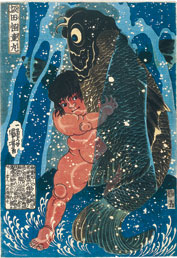


“Sakata Kaidomaru” by Utagawa Kuniyoshi will be included in “Competition and Collaboration: Japanese Prints of the Utagawa School” at the Chazen Museum of Art.
Chazen: Woodblock Prints
The Chazen Museum of Art will exhibit Japanese woodblock prints in “Competition and Collaboration: Japanese Prints of the Utagawa School.” The show includes more than 120 works from its renowned collection of Japanese woodblock prints.
In 18th and 19th century Japan, growing cities created demand for entertainment, resulting in kabuki theaters, the pleasure quarters, festivals and markets, leisure travel, literature and a thriving print publishing industry.
The Utagawa school of artists was responsible for more than half of all existing ukiyo-e prints, or “pictures of the floating world,” which were popular mass-produced woodblock prints.
The Chazen exhibition offers a rare chance to explore a fascinating world ranging from beautiful geisha to dramatic landscapes to magical creatures.
Those who get hooked on Japanese prints will appreciate the ambitious show catalogue, which has more than 200 prints reproduced in its 256 pages.
An opening reception for the show will be held Friday, Nov. 2, from 6–8 p.m.
To complement the exhibit, an international symposium of scholars will examine the Edo-based print culture on Saturday, Nov. 3, from 10 a.m.–5 p.m. The symposium is free. For more information, call the Chazen Museum at 262-2246.
And on Friday, Nov. 9, at 5 p.m. at the Chazen, UW–Madison’s Charo D’Etcheverry, associate professor in the Department of East Asian Languages and Literature, will discuss “Standing Up to the Past: Literature, Humor and Edo Prints.” Gallery hours will be extended to 7:30 p.m.
Design Gallery: Kimono
Like it or not, what we wear says a great deal about us. From buttoned-up all prim and proper to jeans with waistband-below-the-hips sag, many of our clothing decisions are tied to identity.
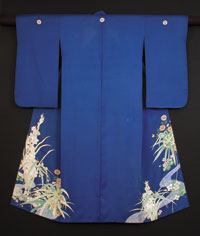
From “Crafting Kimono” on display at the Design Gallery, Nov. 4–Feb. 8.
Such is the case with kimono, the national dress of Japan. The simple, t-shaped, one-size-fits-all garment is quite complex and provides layers of clues about the wearer. The color, sleeve length and style, design and fabric weaves may indicate the gender, marital status and age of the wearer, as well as the occasion or season in which it is worn.
“Crafting Kimono,” on display at the Design Gallery, explores the nuances, materials and techniques that go into creating a kimono. Examples of wedding, formal and everyday kimono featuring a variety of weaving and dyeing methods are presented. The show’s curator, Rebecca Kasemeyer, selected the garments from the extensive holdings of the Helen Louise Allen Textile Collection.
According to Japanesekimono.com, the art of wearing a kimono is also complex. A typical woman’s kimono has 12 or more separate pieces that are worn, matched and secured in prescribed ways. For us novices, an important rule to remember is to wrap the right side of the kimono over the body first, then overlap it with the left side. Right on top of the left is only used to dress a body for burial.
An opening reception for “Crafting Kimono” will be held Sunday, Nov. 4, from 1–4 p.m. At 2 p.m., Japanese textile scholar Mary Dusenbury, formerly of the Center for East Asian Studies at the University of Kansas and acting curator of Asian art at the Spencer Museum of Art, will present a lecture. The show runs through Feb. 3, 2008.
Cinematheque: Mizoguchi Masterpieces
Cinema scholars have compared Kenji Mizoguchi to Shakespeare, Bach and Rembrandt. Although his name is not a household word in the United States, he is considered one of the 20th century’s greatest directors, with films that pack pictorial and narrative richness with emotional force.


A quick post to big-up the Kuniyoshi exhibition currently on at the Royal Academy of Arts in London.
I went yesterday and it totally blew me away. I was expecting an interesting exhibit, but had no idea just how impressive it would be. For one thing, there are a huge number of prints to see, ranging from standard commissions of aristocracy and beautiful ladies to political satire, portrayals of famous warriors, real and fictional, and wonderful imaginative scenes of fantasy.
Putting aside the tremendous skill it takes to draw anything this good (and for the carvers to then transplant this — kanji and all — to a wood block for printing), Utagawa Kuniyoshi‘s attention to detail is astounding. His understanding of posture, composition and artistic effects is extraordinary. Many of the techniques set the groundwork for modern manga — it comes out particularly strongly in the prints portraying explosions and smoke. His strokes for conveying animal fur are uncannily realistic, and his anally retentive attention to detail, particularly for kimono patterns and tattoos remarkable.
Most striking of all is the sheer dynamism of his pictures. Each of the pictures looks so alive, simply by virtue of the pose chosen and the composition of the piece. Some epic pieces have over a dozen things going on in one frame, yet it never feels as claustrophobic, overcrowded or passive as some classical European paintings I’ve seen are. To hit the point home, there is one exhibit where Kuniyoshi deliberately used a European composition instead; it seems so much duller than the other works.
As if that weren’t enough, the room after featured ‘humourous’ and satirical works with courtesans portrayed by sparrows, octopuses (octopi?) anthropomorphised into humans and ‘ghost erotica’ featuring demon vaginas and skeleton penises (I kid you not).
Being a manga fan, I guess I shouldn’t have been so surprised at how much I loved this. But I honestly wasn’t expecting to see quite such a connection between the classic and the modern. It really cemented for me why I like Asian, and particularly Japanese, media quite so much: it’s just so much more imaginative and alive.
Beforehand, we attended the accompanying anime season at the Curzon Soho, watching Origin: Spirits of the Past. Nicely animated, but a bit of a poor man’s Nausicaa. Not a great weekend of anime watching overall, since a surprise Gonzo screening at the Barbican turned out to be Afro Samurai Resurrection, which is not really my cup of tea :p
مانگا، یک شیوه نقاشی ژاپنی شبیه کمیک استریپ است.
اما مانگا پدیده هنری قرن 20 نیست و نسخه های قدیمی نقاشی ژاپنی موسم به مانگا با مجله های مصور کارتونی امروز گرچه متفاوت است اما به نظر می رسد کمیک استریپ از این هنر منشعب شده است.
مانگا ازیک سنت محلی، برخاسته که منشا آن به دوران شکوفایی رنگ آمیزی و حکاکی روی چوب (منبت کاری) به 170 سال قبل در آسیا بر می گردد.
یکی از استادان و شاید بزرگترین استاد این رشته هنری در سال 1797 میلادی در ادو (edo) ، توکیو امروز ، متولد شد. اسم این استاد پیش کسوت هنر مانگا "کانایوشی" Utagawa Kuniyoshi است.
او پسر یک رنگ کار ابریشم بود که در 16 سالگی به عنوان یک نقاش مشغول کار شد و برای مردم چهره های درخواستی را از گیشاها (رقاصه های ژاپنی) و بازیگران می کشید. در سال 1842 میلادی به دنبال اصلاحات تنپو (tenpo) در ژاپن کشیدن این تصاویر ممنوع شد و کانی یوشی به کشیدن تصاویر قهرمانان اسطوره ای روی آورد که این تصاویر نیز شباهت عجیبی به بازیگران تئاتر آن زمان داشت.
حرکت و پویایی و احساساتی از پرسپکتیو و کنتراست (تضاد) رنگها در هنر مانگا (نقاشی) موج می زند. ستاره های گرافیک و نقاشان خیابانی خوب است با این شیوه نقاشی آشنا شوند و از تجربیات آن بهره مند شوند.
شاید بتوان گفت نقاشی های کمیک استریپ کنونی غرب نوعی دزدی ادبی و هنری از این شیوه هنری بدیع و زیبای آسیایی است.
دینامیک، رنگ آمیزی و ترکیب تصاویر و کلیشه ها در هنر مانگا ، چشم را خیره می سازد.
در عکس بالا نیز این ویژگی ها مشاهده می شود علاوه براینکه در این نقاشی به ترسیم عضلات و نیرو بسیار توجه شده است.
(استفاده از این مطلب حتما با قید منبع "قلم سخن" صورت گیرد)
The Royal Academy of Arts presents an exhibition on one of the greatest Japanese print artists, Utagawa Kuniyoshi (1797-1861). Featuring over 150 works, the exhibition presents Kuniyoshi as a master of imaginative design. It reveals the graphic power and beauty of his prints across an unprecedented range of subjects highlighting his ingenious use of the triptych format.
The majority of the exhibition has been drawn from the outstanding collection of Professor Arthur R. Miller which has recently been donated to the American Friends of the British Museum. This is the first major exhibition in the United Kingdom on Utagawa Kuniyoshi since 1961.
Kuniyoshi was a major master of the ‘floating world’, or Ukiyo-e school of Japanese art, and, together with Katsushika Hokusai (1760-1849), Utagawa Hiroshige (1797-1858) and Utagawa Kunisada (1786-1864), dominated nineteenth century printmaking in Japan. Prolific and multitalented, Kuniyoshi considerably expanded the existing repertoire of the school, particularly with thousands of designs that brought vividly to life famous military exploits in Japan and China. Kuniyoshi developed an extraordinarily powerful and imaginative style in his prints, often spreading a scene dynamically across all three sheets of the traditional triptych format and linking the composition with one bold unifying element - a major artistic innovation.
Kuniyoshi is the third exhibition in a series dedicated to Japanese Artists and Printmakers to be held at the Royal Academy of Arts. The previous exhibitions have been Hokusai (1991-92) and Hiroshige: Images of Mist, Rain, Moon and Snow (1997).
Organisation
This exhibition has been organised by the Royal Academy of Arts in collaboration with Arthur R. Miller and The British Museum.
Kuniyoshi is curated by Timothy Clark, Head of the Japanese Section in the Department of Asia at the British Museum together with Japanese print specialist, Israel Goldman and Dr Adrian Locke of the Royal Academy of Arts.
Sponsor's statement
"Canon is delighted to support this exhibition that shares and celebrates the traditional culture of Japan. As a Japanese company with a long tradition in supporting culture and society through the arts, we are proud to be associated with one of the world’s finest art institutions and one of the greatest Japanese artists, Utagawa Kuniyoshi."
- James Leipnik, Chief of Communication and Corporate Relations, Canon Europe


هنر هنری artistic art artist arts artists هنرمند نقاشی کارتونی انیم انیمه anime مانگا mang نقاشی کودک کودکان کودکانه بچه گانه طفل اطفال نی نی نقاشی چینی ماهی ها ماهیها ماهیان چین آبرنگ نگارگری نقاشی ژاپن ژاپنی japan japanese panting ukioe نقاشی چین چینی china chinese painting پسربچه یا دختربچه قرمز سرخ ماهی سیاه مشکی را بغل کرده در آغوش گرفته از آبشار آبی پایین میپرد یا شاید کف دریا یا اقیانوس ایستاده یا لب ساحل ماهی را گرفته و با دست آن را شکار کرده صید صیاد صیادی
فهرست نقاشی کارتونی انیمه مانگا کودک کودکان کودکانه نقاشی چین چینی ژاپن ژاپنی اروپایی


خب فقط يك نگاه گذرا به چندتا اثر نقاشي از ژاپن هم بكنيم!
فهرست نقاشی نی نی ها برای کارت پستال کتاب کودک مدل نقاشی کاریکاتور کارتون انیمیشن
 beautiful fine art - basic find all